

Counter-Initiation: Critical Remarks on Some Aspects of the Doctrine of René Guénon
Signed as written in 1997, this essay was originally published in Russian in Konets Sveta: Eskhatologiia i traditsiia [The End of the World: Eschatology and Tradition] (Moscow: Arktogeia, 1997/1998)

From the archives:
Signed as written in 1997, this essay was originally published in Russian in Konets Sveta: Eskhatologiia i traditsiia [The End of the World: Eschatology and Tradition] (Moscow: Arktogeia, 1997/1998) — which some bibliographies refer to as issue no. 3 of the journal Mily Angel [Sweet Angel] — and was then revised and republished as an appendix to the second edition of the book Puti Absoliuta (The Ways of the Absolute) in the three-book volume Absoliutnaia Rodina [Absolute Homeland] (Moscow: Arktogeia, 1999).
This first English translation, which appeared on Eurasianist Internet Archive in 2019, has been comprehensively revised by Jafe Arnold especially for PRAV Perspectives.
Preliminary Remarks: The Necessity of Correcting Traditionalism
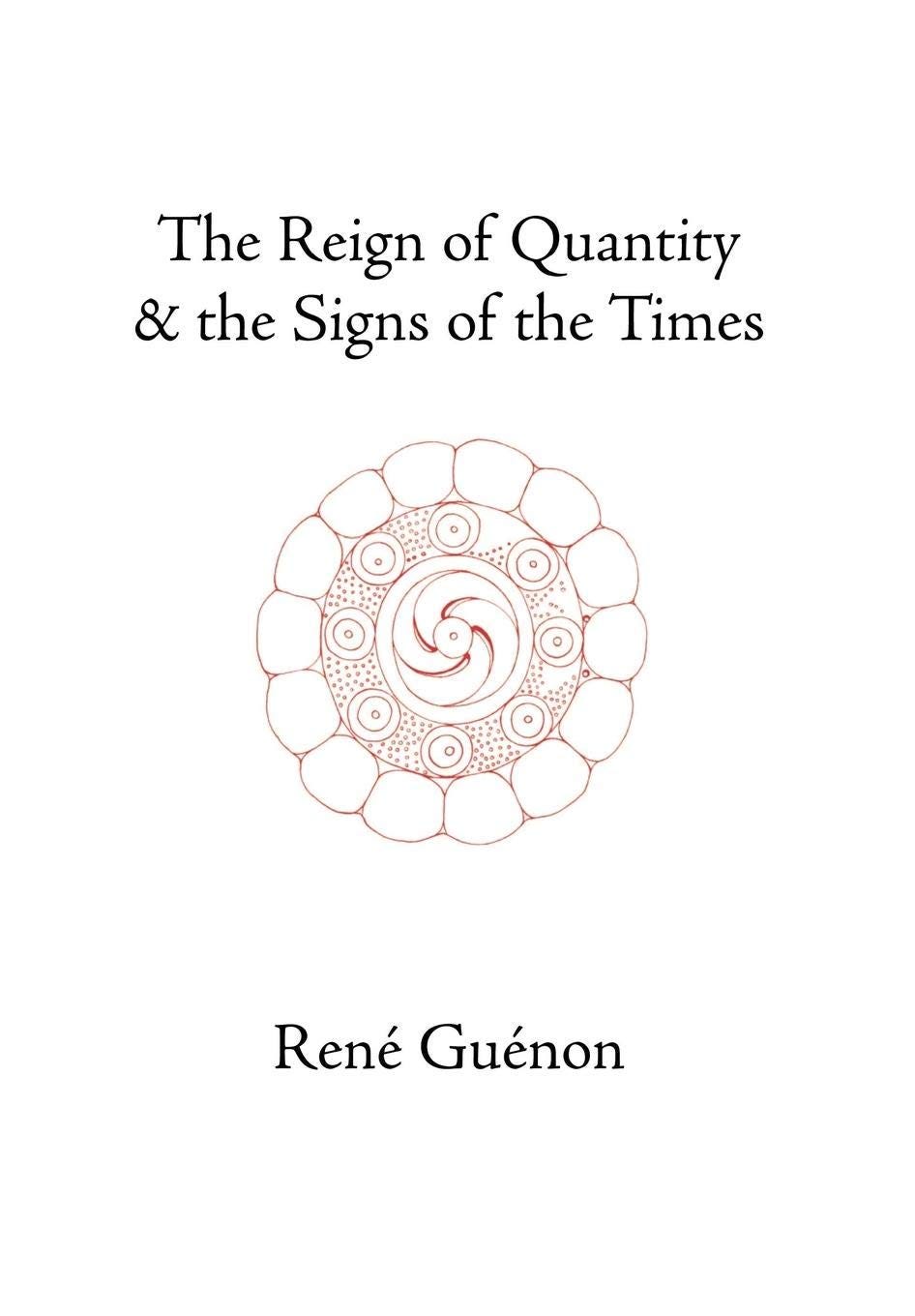
The question of “counter-initiation” is the most shrouded and ambiguous in all of Traditionalist thought. Perhaps this is a consequence of the very reality which Traditionalists, following Guénon, usually denote with the term “counter-initiation.”The meaning of counter-initiation is set out by René Guénon in his book The Reign of Quantity and the Signs of the Times.
Preliminary Remarks: The Necessity of Correcting Traditionalism
The question of “counter-initiation” is the most shrouded and ambiguous in all of Traditionalist thought. Perhaps this is a consequence of the very reality which Traditionalists, following Guénon, usually denote with the term “counter-initiation.”The meaning of counter-initiation is set out by René Guénon in his book The Reign of Quantity and the Signs of the Times.1
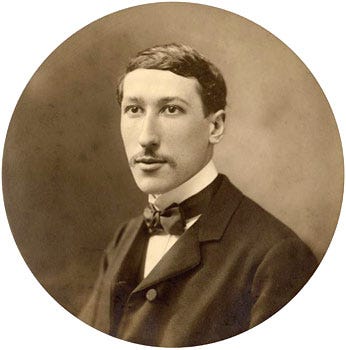
In brief, we can say that Guénon understands counter-initiation to be a whole set of secret organizations which, although in possession of initiatic and esoteric data, nonetheless direct their activities and efforts towards a goal which is the direct opposite of normal initiation, i.e., not towards attaining the absolute, but towards fatal disappearance and dissolution amidst the “reign of quantity” in its external twilight. In line with Islamic esotericism, Guénon called the hierarchs of counter-initiation Awliya es-Shaytan, that is to say the “saints of Satan.” From Guénon’s point of view, representatives of counter-initiation stand behind all the negative tendencies of modern civilization and are secretly steering the course of affairs down the path of degradation, materialization, and spiritual degeneration.
Since, according to Tradition, the logic of the cyclical process inevitably boils down to a path of degradation, from the Golden Age to the Iron Age. it follows that there should be certain conscious forces contributing to this process just as, conversely, the forces of true initiation and genuine esotericism try to impede this fatal decline by all means. This historical dualism of Guénon’s in no way affects the metaphysical unity of the Principle, insofar as it belongs to the sphere of manifestation, where the main law is that of duality. This duality at the very heart of manifestation is overcome only upon going beyond the manifest into the sphere of the transcendental. Within the world, dualism is indelible. Thus, the role of counter-initiation is partly justified, since it is rooted not in arbitrariness, but in the very providential necessity tied to the laws of the cosmos.
This purely theoretical aspect of the doctrine of counter-initiation is completely flawless from a logical point of view and is confirmed by the various doctrines of sacred traditions which deal with “demons”, “the devil”, “evil spirits”, the “Antichrist”, etc. But everything becomes much more complicated when we attempt to move from theory to practice and name specific organizations or secret societies as examples of counter-initiation. This is only part of the problem. Before we can clarify this subtle question, it is necessary to more attentively examine what René Guénon meant by “initiation” and “esotericism.”
According to Guénon, the historical differences between sacred forms — religions, traditions, etc. — is a consequence of the differing qualities of the human and historical environments into which the rays of the One Non-Human Truth are projected. In other words, for Guénon, all traditions, as one approaches their center, transcend confessional differences and almost merge into something singular. Guénon called this the “Primordial Tradition” (la Tradition Primordiale). This Tradition, according to Guénon, constitutes the secret essence of all religions. In a certain sense, this is right. Careful study of the symbolism of Tradition, its rituals and doctrines, leads one to the thought that all sacred teachings have a certain common element or paradigm which is somewhat lost sight of when one arrives at more narrow dogmatic aspects and matters of detail. The thesis of the “unity of Tradition” is particularly convincing in current circumstances, as the modern world has created a civilization whose very foundation strikingly contrasts with everything that might be called Tradition. In other words, Integral Traditionalism and appealing to the One Tradition are credible to the extent that the modern world is opposed to all those civilizational forms that are founded on sacred principles. Indeed, there are many more similarities than differences between the various traditions and religions when compared to the generally contrasting backdrop of modern, completely desacralized civilization. This postulate is obvious. The question is: to what extent is this convergence in the face of a common enemy a consequence of esoteric unity?
In other words, are the differences between sacred traditions themselves merely the result of faults in the cosmic environment at certain moments in the cycle? Are there not some deeper reasons behind this?
One glaring example of the relevance of such doubt can be seen in Guénon’s hesitation as to whether Buddhism should be counted an authentic tradition or not. Guénon initially relegated Buddhism to the category of antinomian heresies, but later recognized it to be a genuine tradition. The matter at hand is not even about Buddhism, but the fact that such uncertainty on Guénon’s part exhibits a certain conditionality of his method whenever the matter at hand concerns concrete historical traditions and their dogmatic principles. If even Guénon could be mistaken on the question of Buddhism (which for him remained largely an abstraction, for the analysis of which Guénon relied on the opinions of Hindu informants who, like all Hindu Traditionalists, are distinguished by their acutely anti-Buddhist orientation2) then it cannot be excluded that such errors may occur in the case of other religions as well.
Our own studies have led us to the conclusion that Guénon’s assessment was not quite right in at least two other cases.
First, when Guénon denied the Christian Church an initiatic dimension — and he dated the loss of this dimension (present in early Christianity) to the era of the first Ecumenical Councils – he was clearly relying exclusively on the history and historiosophy of the Catholic branch (with the later deviation of Protestantism). Guénon clearly ignored the metaphysical and initiatic reality of Orthodoxy, which differs from Western Christianity sharply on the most fundamental positions. Guénon equated Christianity with Catholicism and inappropriately projected the proportions of the Catholic organization — including the mystical nature of its rituals and theological specificities — onto Christianity as a whole. This rendered his views on the matter completely incorrect.3
Second, Guénon hastily recognized Jewish Kabbalah to bear the quality of genuine esotericism — which, in his opinion, is distinguished by universalism and is beyond any particularisms. But in fact, Kabbalah insists on the ethnic specialness of Jews, the uniqueness of their fate, and their metaphysical antagonism towards all other peoples and religions. This clearly contradicts Guénon’s definition of esotericism, according to which the principles of universal unity should predominate and all spiritual and religious forms merge into a common concept. Even in its most transcendent aspects, Kabbalah affirms not unity, but a radical and indelible metaphysico-ethnic dualism.
Furthermore, on a more general plane, Guénon’s assessments of certain peoples — such as the ancient Greeks, the Japanese, the Germans, the Anglo-Saxons, and the Slavs — were at times so subjective and arbitrary (and at times Guénon even endeavors to base some of his conclusions as to the orthodoxy or non-orthodoxy of various traditional forms on these appraisals) that all the aspects of Traditionalism which pertain to the application of theoretical considerations to the practical sphere become questionable.
Continue:

Analisi che trovo molto interessante.
It seems to me, that your Russians, do not want anybody to go to war?!?
Ain"t that Dandy!