

The Luminous Battle
A Philosophical Synthesis of the Iranian Spirit

The Cradle of the Universal Mind: Iran’s Hidden Influence
To engage with the Iranian spirit—the Res Iranica—is to undergo a profound meeting with the primordial archetypes of the Indo-European past. Iranian civilization is far more than a localized cultural phenomenon; it is the “introverted” guardian of the metaphysical fire that first ignited the Western consciousness. The “Iranian Thing” represents an unchanging core of identity that provided the ancient world with its most transformative ontological ruptures.
The significance of this influence constitutes a “metaphysical shock.” By shattering the ancient, circular trap of repetitive time and replacing it with the arrow of history, Iran made the concepts of “Progress,” “Justice,” and “Salvation” logically possible for the West. Without this specific Iranian ignition, the Hellenistic, Jewish, and eventually European perceptions of existence would lack their teleological drive.
The specific primordial archetypes that migrated from Iran include:
Linear History: The shift from the cyclical “eternal return” to a directed line moving toward a definitive resolution.
Sacred History: The understanding that history is not a series of random accidents, but a purposeful field of cosmic combat.
The Messiah (Saoshyant): The archetype of the final leader who intervenes to conclude the conflict between Light and Shadow.
Metaphysical Time: The realization that time itself is a vessel for victory, a substance created by and for the struggle of the Truth.
This internal, radical structure of reality is not merely a historical record but an architecture of absolute opposition.
--------------------------------------------------------------------------------
The Architecture of Radical Dualism: Light vs. Darkness
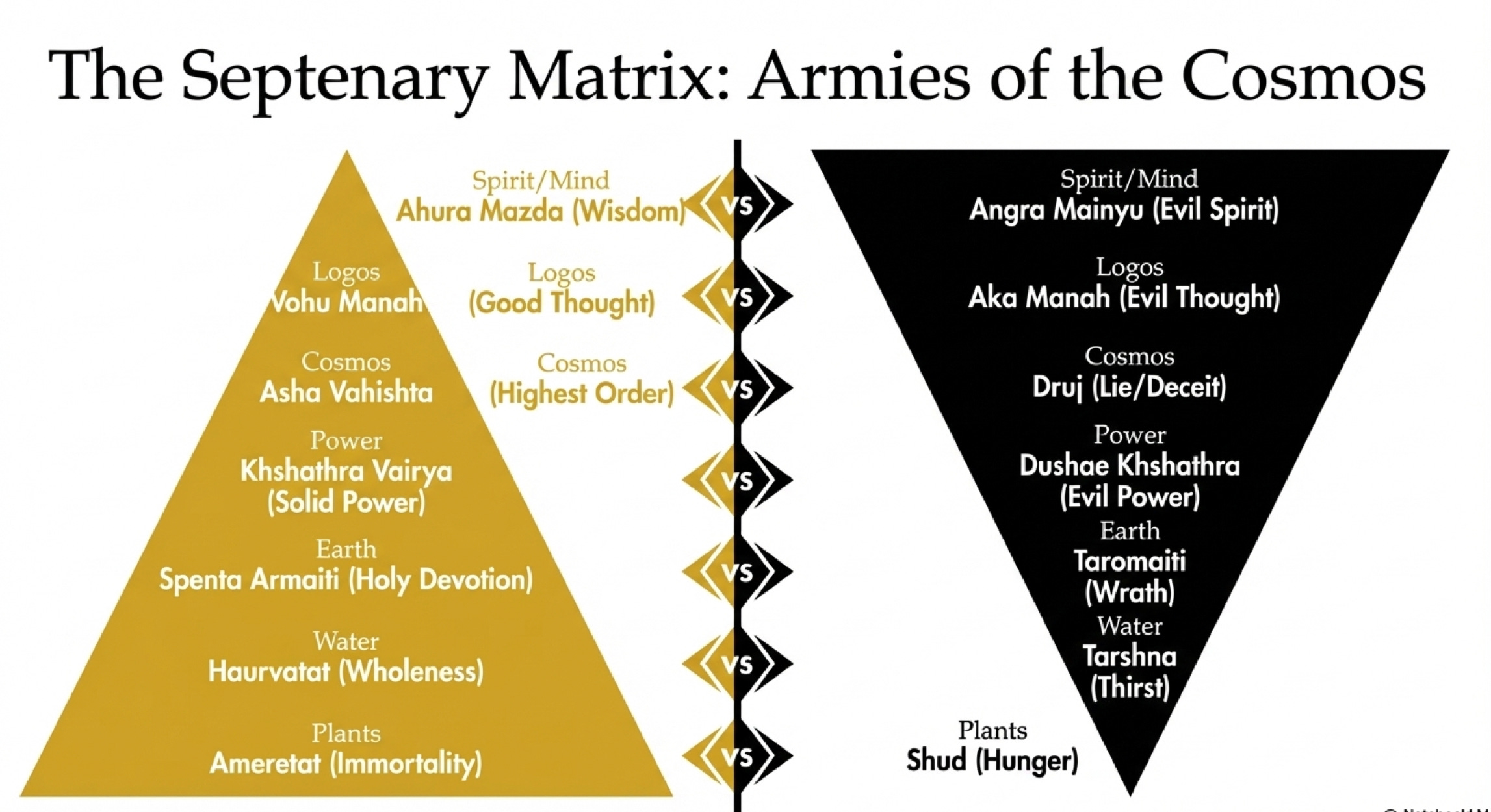
The Res Iranica is defined by an uncompromising, equipollent dualism. Reality is a verticality stretched between two super-powers: Ahura-Mazda, the Supreme Lord of Wisdom, and Angra-Mainyu, the Spirit of Destruction and the Great Deceiver. This is not an ethical choice within a neutral world, but a division of the world itself. The universe is split between Mēnōg (the spiritual/thought realm of ideas) and Gētīg (the material realm of life), where the latter has become a theatre of invasion.
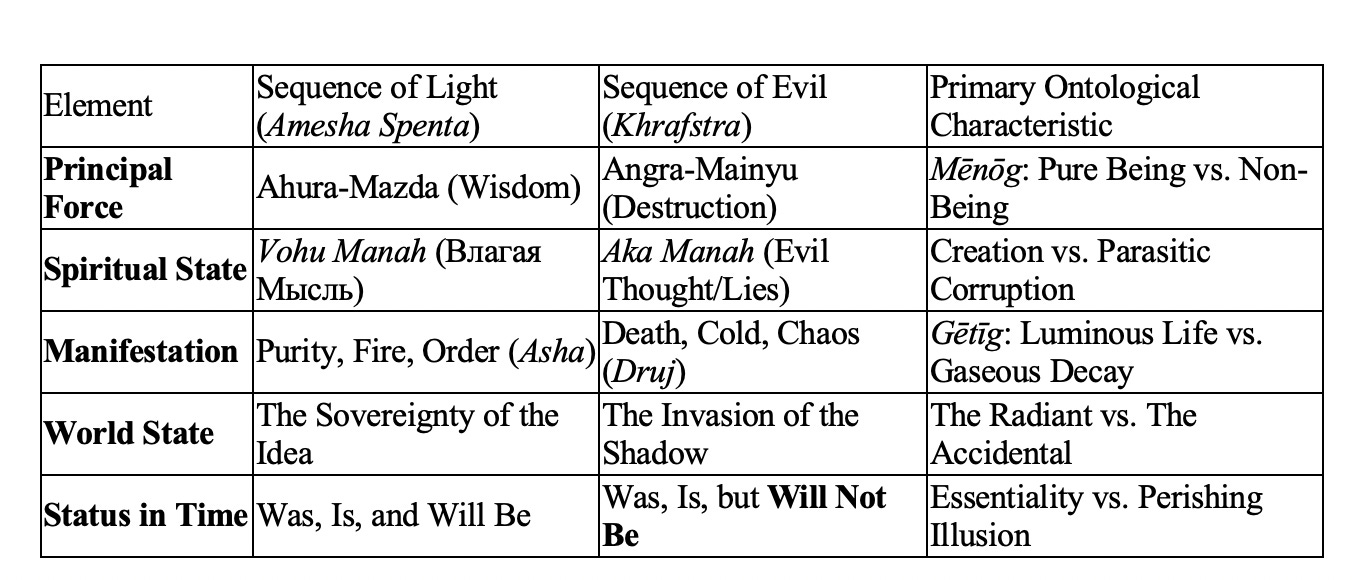
In this framework, there is no neutral ground; every grain of the material world is either a conduit for the divine fire or a stronghold for the Lie. From these static identities, we move to the dynamic state of their interaction: the War.
The Metaphysics of the Light-War
The Iranian spirit views existence as the Light-War. In the Res Iranica, Light is not merely a participant in the war; Light is the war. It is the “invasion of the Other into This,” the subtle power of truth known as raoxšna striking the density of the material world. This is not a war for resources or territory, but an ontological struggle for the substance of Truth itself.
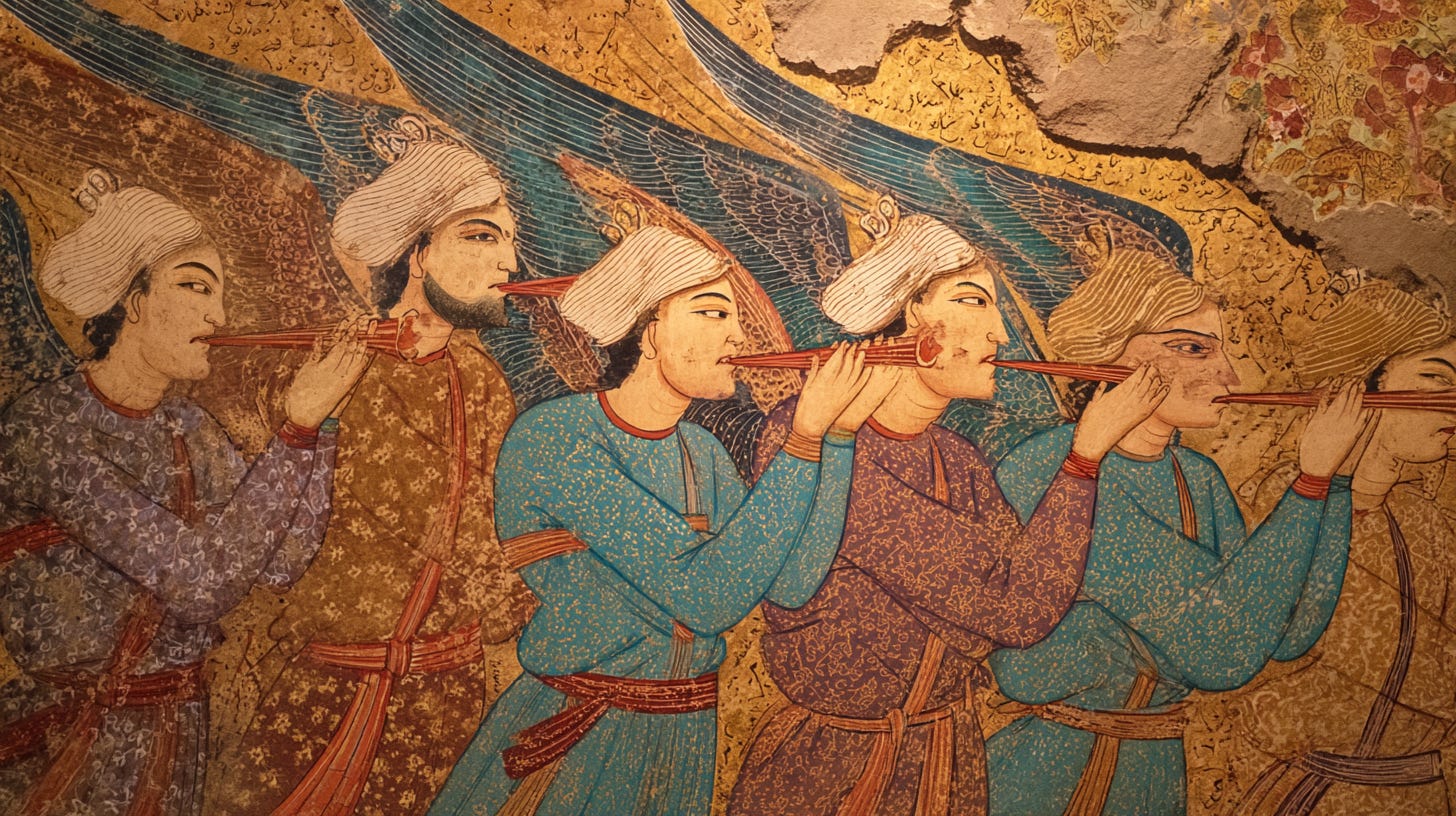
The “Paradox of the Army of Light” dictates that the Solar Warrior often faces defeat in the Gētīg (material) world. Because the forces of Light are the embodiment of the “Sovereignty of Truth” (Asha), they are limited in tactics; they cannot retreat into the low strategies of lies or treachery used by the Darkness. To use the tools of the Shadow is to cease being the Light. Therefore, material defeat is often the price of maintaining “ontological symmetry” with the divine.
The Three Rules of the Solar Warrior:
The Sovereignty of Asha: The warrior must never defect to the enemy’s tactics. A victory achieved through a lie is a metaphysical surrender to Angra-Mainyu.
The Maintenance of Purity: Combat is an ascetic rite. The warrior is a conduit for the divine fire, requiring “purity of thought, word, and deed” to sustain the luminous connection.
The Metaphysics of Martyrdom: Grounded in the absolute value of the Idea, the warrior recognizes that a material fall is a victory in the Truth. To perish in alignment with the Light is to conquer the illusion of death.
This war is not an infinite, aimless chaos, but is governed by a specific, revolutionary structure of time.
From Cycle to Arrow: The Birth of Linear Time and Sacred History
The “Culture of Expectation” (farhangī intizōr) is the engine of the Iranian spirit. It transformed time from a prison-circle into a lethal arrow aimed at the heart of the Shadow. In this view, time only possesses meaning because it is the record of the war and possesses a definitive end.
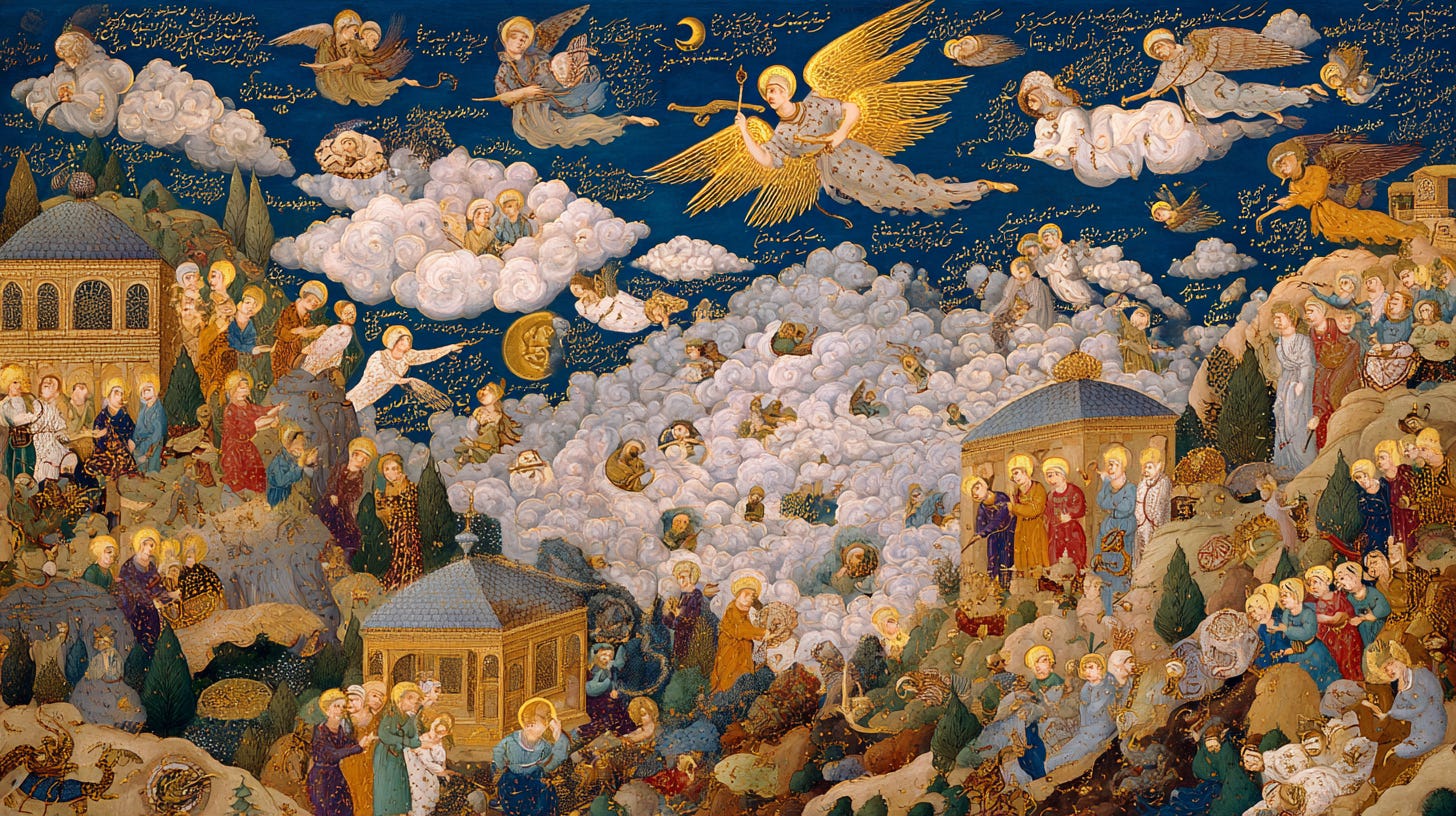
“Time is the unfolding of an ontological rupture. The farhangī intizōr defines the human condition as a directed movement toward the final Restoration (Frashokard). History is not a neutral background; it is the process of the Light’s vengeance against the invasion of the Darkness, a movement toward the absolute evaporation of the Lie.”
This sacred history is articulated through three major eras:
Bundahishn (Creation): The era of primordial, “noon-day” purity where the world was purely Mēnōg and the sun stood still.
Gumezishn (Mixture): Our current era of “Light-War,” where the Darkness has pierced the base of the world, infecting life with death, disease, and the Druj.
Wizarishn (Separation/Resolution): The final phase of separation where the Light is extracted from the Shadow, leading to Frashokard, the final Restoration and Resurrection of the “Body of Future Glory.”
The conclusion of this temporal arrow is brought about by the figure who embodies the solar zenith—the Savior.
The Saoshyant and the Khvarenah: The Savior and the Sacred King
The climax of the Light-War is the arrival of the Saoshyant, the Last King-Savior. He is the ultimate leader of the Armies of Light, but his authority is not based on a social contract. It is rooted in Khvarenah, the “solar disk of glory” (Svet Slavy). In the Iranian tradition, political power is a “transversal tension of the deity” projected into the world—a sacred fire that validates the leader’s position in the cosmic hierarchy.
The Three Features of the Khvarenah:
The Solar Aura of Glory: It is a visible/spiritual manifestation of divine light that rests upon the true ruler. It is the “glow” of absolute ontological validation.
The Fragility of Asha: The Khvarenah is not a permanent possession; it “flies away” the moment a leader turns toward the Lie. It is the spiritual indicator of a ruler’s alignment with the Supreme Thought.
The Royal Fire as Shield: It signifies that the King is the earthly representative of the Light-War, a guardian responsible for maintaining the purity of the realm against the khrafstra.
These ancient Zoroastrian themes did not vanish with the arrival of Islam; they found a new, “introverted” home.
The Persistence of Light: From Zoroaster to Shiite Ishraq
The “Iranian Thing” survived the Islamic transition by internalizing the Light-War. In the “Ishraq” (Illuminationist) school of Suhrawardi and the works of Henri Corbin, the external battle became a mystical, internal reality. The “Light of Glory” (Svet Slavy) was preserved within the figure of the Hidden Imam (The Mahdi), the expected one who remains the secret sovereign of the Light-War.
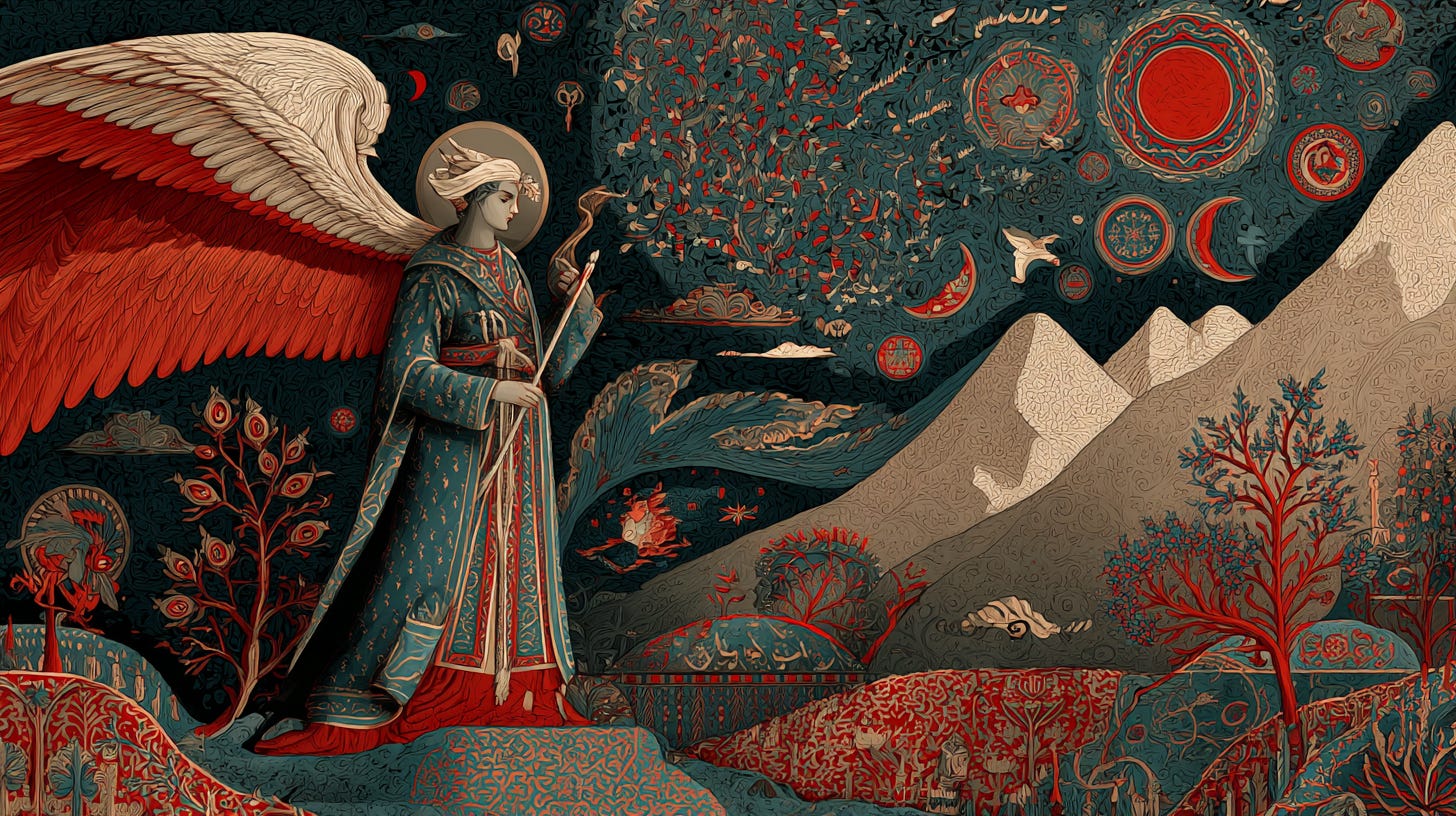
The “Physical Empire” of the Achaemenids was transformed into the “Spiritual Realm of Light” or the Imamate, where the war against the дэвы (demons) became a continuous internal Illumination.
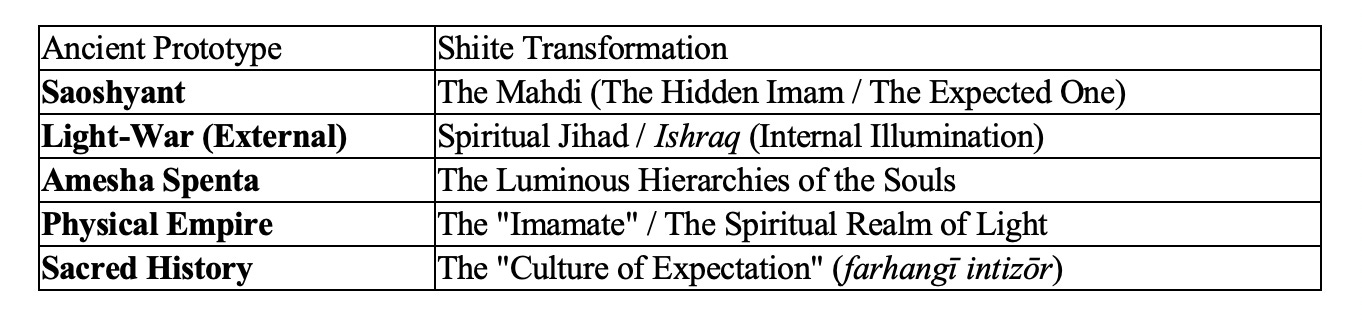
The Iranian spirit remains an “introverted” yet powerful guardian, ensuring that the metaphysics of Light continues to challenge the encroaching shadows of the modern world.
The Eternal Horizon of Expectation
To understand the modern world’s drive for history and justice, one must return to the Iranian fire. The Res Iranica is an unchanging identity that views existence as a violent choice. It teaches that the universe is not a “given” but a battleground, and that neutrality is merely a clever illusion manufactured by the Darkness to disarm the Solar Warrior.
Key Insight: The Iranian Legacy The “Iranian Thing” is the realization that to exist is to be a soldier. Neutrality is an illusion created by the Darkness. Existence itself is an active Choice between the Asha (Truth) of Ahura-Mazda and the corrosive Druj (Lie) of Angra-Mainyu. To participate in the sacred history is to join the “Culture of Expectation,” recognizing that time is the vessel of our inevitable victory and the medium through which the Truth purifies the world.
Thanks for your great work!
We've restacked and shared this link on 'The Stacks'
https://askeptic.substack.com/p/the-stacks
A magnificent explanation of the Iranian psyche.